Know what to work on next in your AI-built product.
A senior engineer reviews the product you built with AI tools and sends you a written, ranked list of what to work on next. You keep building it, with your own tools.
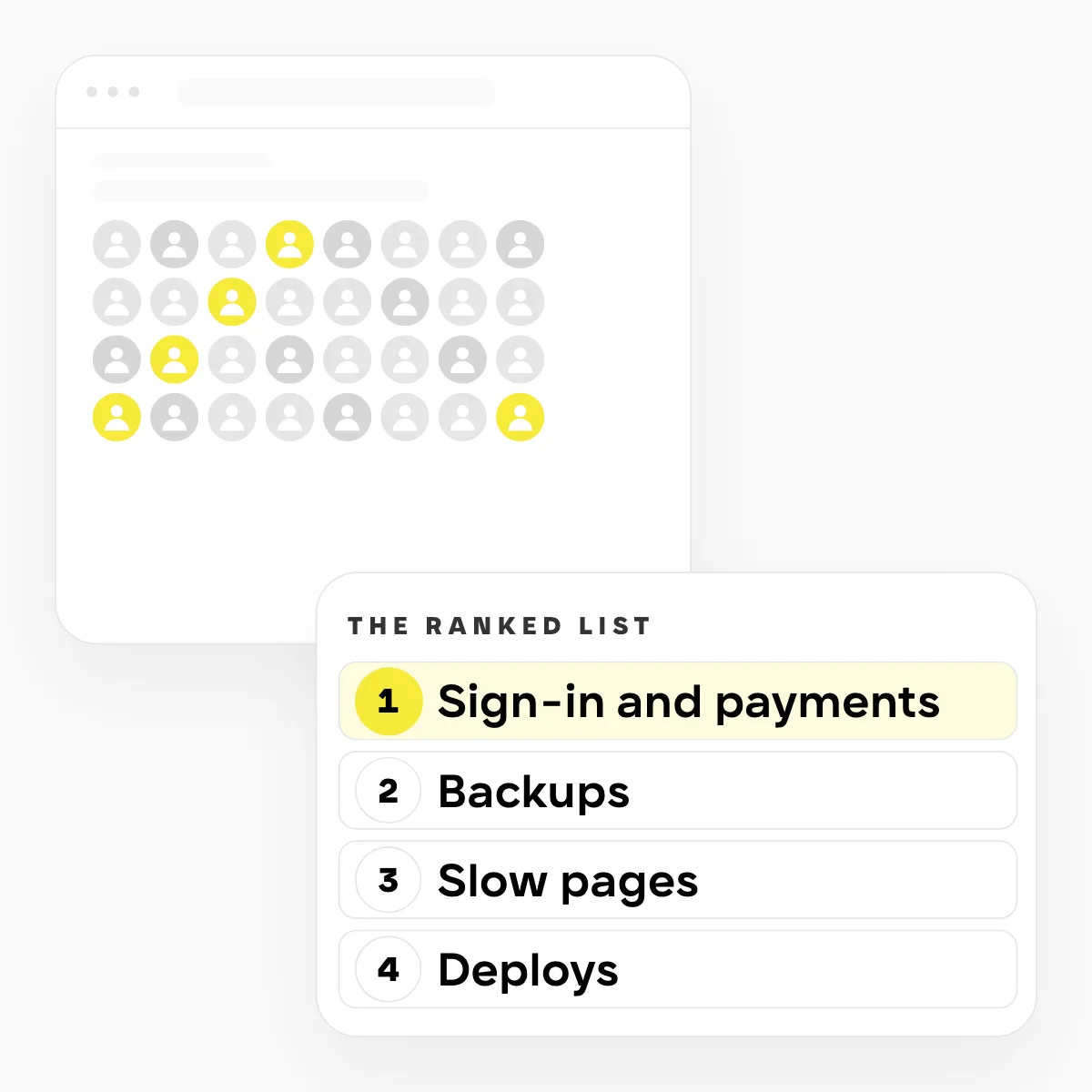
You built it. Now you want to know what to work on next
You built a working product with AI tools, and people are starting to use it. What you want now is a second opinion on where to put your next few weeks.
Three things make that call hard on your own.
- The twenty-item list. You can name twenty things you are not sure about. You cannot tell which three matter this month, so they sit there with equal weight and none of them get done.
- Every call is yours. You are making architecture decisions alone and at speed, with nobody senior to check them against, and the hours you spend wondering whether you got one right are hours you are not building.
- People rely on it now. When somebody else's work depends on what you built, you want a clear basis for deciding what to change next.
Who you would be talking to
I am David. I build with AI tools daily. I prompt, I review what comes back, I ship it.
- Twenty years of this. I have been building web applications since the early days of the internet, through to cloud-native architectures. Most of the problems you are about to hit, I have hit.
- I led development at agencies. Complex applications, real deadlines, other people's money. That is where you learn which corners cost you later and which ones never do.
- I run my own products. I have built software products from nothing and I operate them, including Glasswise. I know what it is like when the thing you built is the thing that pays you.
- Based in Europe. I work in Central European Time.
Three steps
- We talk for half an hour. You show me what you built and what you want a second opinion on. We agree which code and product areas the € 950 review covers before either of us commits.
- I review it. Read access to the repository and a look at what is live. Within five working days you have the written review.
- We walk through it and you start at the top. Half an hour on the document, then the list is yours to work down. You keep the review, the repository and the knowledge of how it all works.
The review, in full
€ 950 plus VAT, fixed. After the free introductory call confirms the scope, you book the review and pay. You receive the written review within five working days after we agree the scope and I receive read access to your repository.
What I look at, inside the scope we agree on the call: keys and access, the database and its permission rules, sign-in and payments, the pages and queries that get worse as users arrive, how a deploy happens and what you can roll back, backups and dependencies, and where the code will resist the next change. I do not ask for production credentials, so anything that can only be seen from inside your hosting is reviewed from the evidence you give me, and anything neither of us can establish is marked as unconfirmed.
What you receive:
| Part of the review | What it gives you |
|---|---|
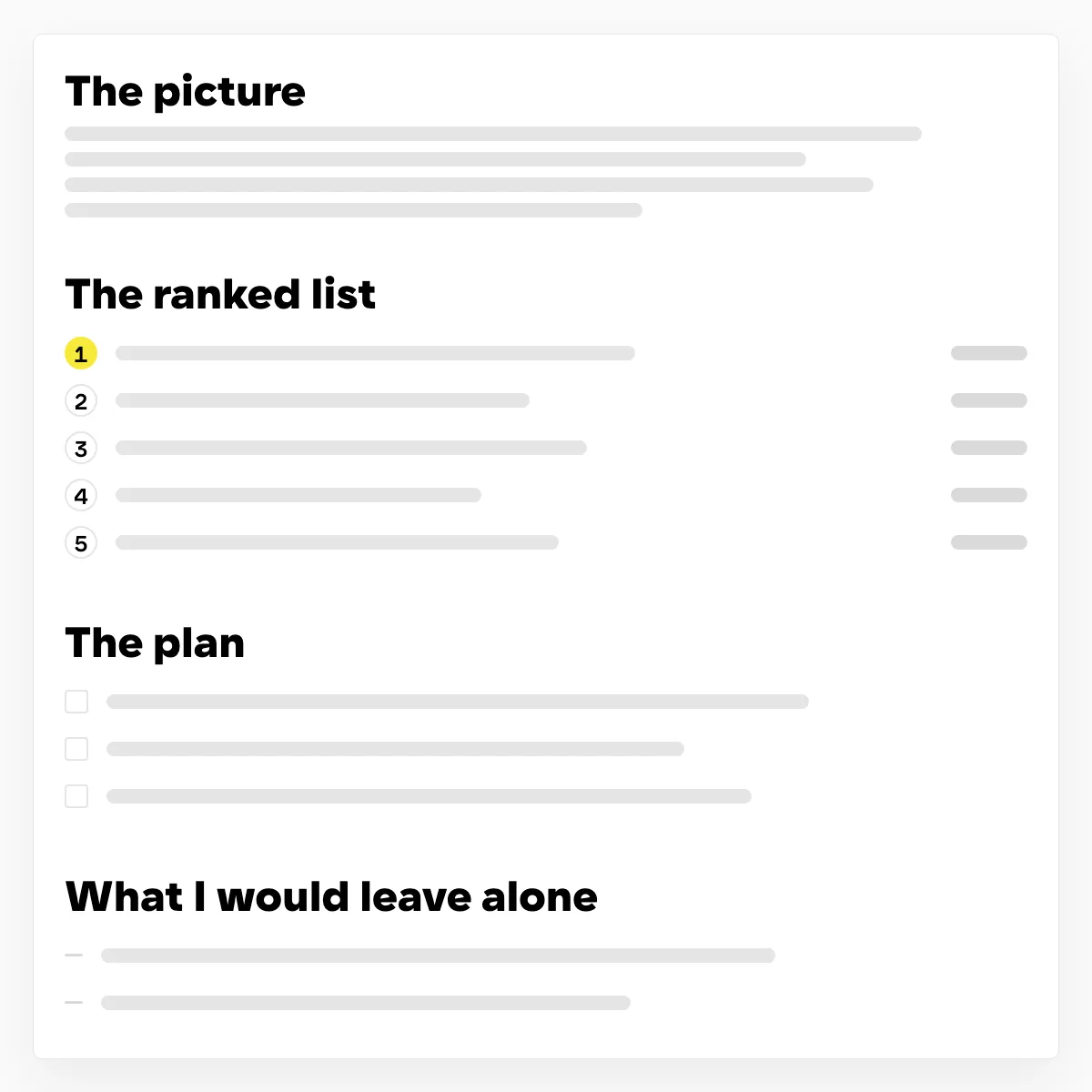
| The picture | Where the product stands for the users you have now |
| The ranked list | Every finding in the order I would handle it, with why it matters and the effort to address it |
| The plan | Up to five priorities written as work you can start this week |
| What to leave alone | The alarming-looking things not worth your week |
| The walkthrough | Half an hour, the week after, to argue with the ranking |
What it is not: I do not write the code and I do not take the product over. Read access is where my involvement in your repository stops. The review does not certify the product's security.
Is this the right thing for you
| This fits when | This is a different job when |
|---|---|
| Your product works and people are using it, or are about to | You want someone to build or finish it for you. That is a development contract, and I can point you at people who do it well |
| You want to keep building it yourself | You need a pair of hands shipping your backlog to a deadline |
| You want a second opinion on which changes to prioritise | There is no working product yet |
| You want to keep your tools, whichever they are | You are working in machine learning research or blockchain infrastructure. Not my field, and you deserve someone whose field it is |
If you want advice to continue
The review is the place to start. Once it is done, some founders want a senior engineer to keep asking. Three monthly plans, prices before VAT. Month to month, and you can move between them or stop whenever it stops being useful. You still write the code in all three.
| Plan | What it includes |
|---|---|
| Ask Anything, € 399 a month | Send me the problem, the code, the error or the plan, on WhatsApp or by message, and get a plain answer the same working day. Nothing to book. |
| Eyes on the Code, € 1.299 a month | Everything in Ask Anything, and I read your codebase on a regular rhythm and write down what to deal with next, in order. |
| Side by Side, € 2.499 a month | Everything in Eyes on the Code, plus regular pairing sessions on the hard parts, such as a migration or a bug nobody can reproduce. You drive, I sit next to you. |
What changes
Without a clear order, it is hard to decide which changes deserve your time. The review gives you a ranked list and the reasons behind it. You choose what to tackle and you implement the changes with your own tools, in the time you have, and the knowledge stays with you because you are the one doing the work.
Book the review
Start with a 30-minute call to confirm the scope. Bring a link to the product and one sentence about what you want a second opinion on.
Book the reviewThe introductory call is free. Once we confirm the scope, you book the review and pay € 950 plus VAT. If the call tells me the review is not what you need, I will say so on the call.
Do you write the code?
No. You write it, the way you have been writing it. My job is to review what you have and tell you what to work on and in what order. The product stays yours, and so does the knowledge of how it works.
Do I have to stop using my AI tools?
No. Cursor, Claude Code, Lovable, Replit, v0: they are tools and I use them daily. The review is written so you can point them at the right things.
What access do you need?
Read access to the repository, and a look at the running product. That is where it stops: the repository, the hosting, the domain, the payment dashboard and the customer data all stay in your name, and I never ask for production credentials.
Which stacks can you help with?
Web applications, mostly JavaScript and TypeScript: React, Next.js, Astro, Node, and the databases and hosting platforms around them. Years of Python, PHP and SQL as well. If you built on something I do not know well, I will say so on the call rather than charge you to learn it.
What happens if I disagree with the ranking?
That is what the walkthrough call is for. You are balancing things I cannot see, like a launch date or a customer who is about to walk. I will tell you once, clearly, when I think something is a genuinely bad idea, and then it is your product and your call.